What Not to Flush, and When a Clog Means a Sewer Problem
Most clogs start with something that should have gone in the trash, and a few of them are really sewer problems in disguise.
October 16, 2026 · 4 min read
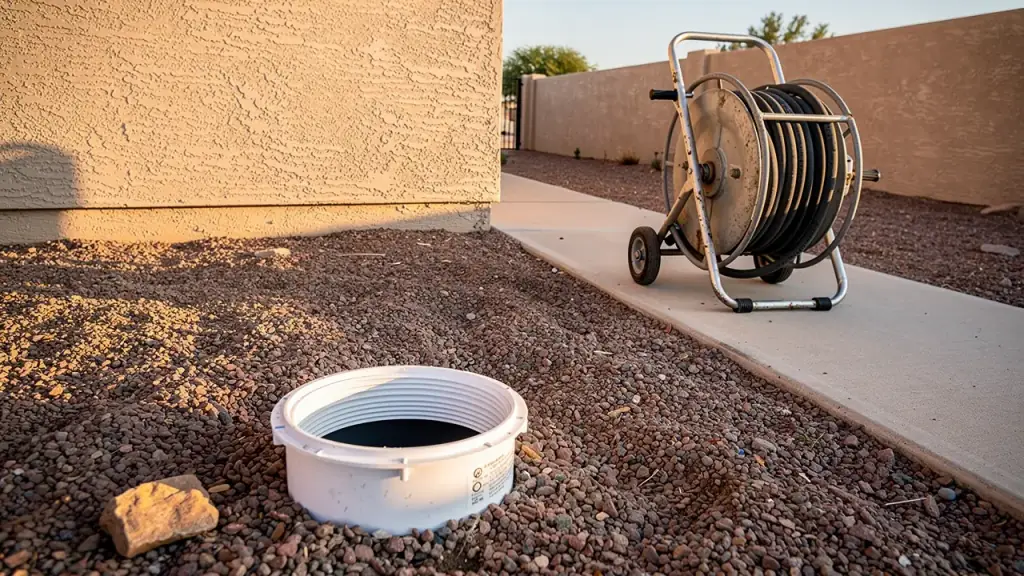
A slow drain feels like a small annoyance right up until it backs up into a tub at nine at night. Most clogs are built slowly, a little at a time, out of things people didn't realize were a problem. Some of them aren't clogs at all but a warning from the sewer line. Here's what should stay out of your pipes, how often professional cleaning makes sense, and how to tell the difference between a clog and something bigger.
The do-not-flush and do-not-drain list
Sunstate Plumbing keeps a list of things that should never go down your drains. If you only remember one rule, remember that the toilet takes human waste and toilet paper, and the sink takes water and a little soap. Everything else goes in the trash.
- Fats, oils and grease. They go down as a liquid, cool in the pipe and coat the walls, and every other scrap that follows sticks to them.
- Coffee grounds. They don't dissolve, and they pack together into a dense sludge.
- Egg shells and starchy foods like rice, pasta and potato peels. Starch swells and turns into paste, and shell fragments catch on whatever's already there.
- Fibrous vegetables such as celery and corn husks. The strings wrap around anything in the pipe.
- Paper towels. They're built to stay together when wet, which is the opposite of what a drain needs.
- Wipes, including the ones labeled flushable. They don't break down the way toilet paper does.
- Feminine hygiene products, toys and other foreign objects.
- Household cleaning products poured down the drain in volume. They don't clear a real blockage and they aren't kind to the next person working on that line.
How often drains should be professionally cleaned
As a general rule, Sunstate recommends professional drain cleaning every one to three years for a typical home. High-use households, and commercial properties like restaurants, may need it every six to twelve months. The right schedule depends on how much the system gets used, the age and material of the piping, and local water quality. Hard water and mineral buildup play a role here in the West Valley, because scale narrows a pipe's inside surface and gives everything else something to catch on.
Cleaning on a schedule is cheaper than cleaning in an emergency, and it tends to head off water damage. A technician can also look at the age and condition of your plumbing and suggest a maintenance schedule that fits the house, instead of a one-size-fits-all number.
Signs it's time to call
Don't wait for a full backup. These are the early signals:
- Sinks, tubs or showers that drain slowly.
- The same drain clogging again and again.
- Foul odors from a drain, which usually point to trapped organic matter.
- Gurgling or bubbling from drains or toilets.
- Water pooling in a sink, tub or toilet after use.
- More than one drain misbehaving at the same time.
When a recurring clog is really a sewer problem
One slow drain usually means a local clog in that fixture's line. Several drains slowing down together, a toilet that gurgles when the washing machine drains, or a clog that returns a week after it was cleared, all point toward the main sewer line instead. The blockage may be further down than any fixture's trap, and snaking the same drain over and over only buys you time.
Inside the main line, causes can include tree roots finding their way into a joint, a section of pipe that has sagged so water pools in the low spot, a cracked or collapsed section, or a heavy buildup that a standard cleaning can't fully clear. A camera inspection sends a small camera through the line so the plumber can see which one it is, instead of guessing from symptoms. Sunstate's sewer services include cleaning and inspections, as well as emergency service.
If the line itself has failed
When a section of sewer line is cracked, collapsed or full of roots, cleaning only helps temporarily, and replacement is the real fix. Replacement doesn't always mean trenching up the whole yard and driveway. Trenchless sewer replacement is one of Sunstate's services, and it replaces the line with far less digging than the old method, which matters when the line runs under landscaping, a patio or a driveway you'd like to keep.
Whether trenchless is possible depends on the condition and layout of the line, and the camera inspection is what tells a plumber that. If you're being quoted for a replacement, ask to see the footage that shows the problem.
Small habits that keep drains clear
Scrape plates into the trash, wipe greasy pans with a paper towel before washing, keep a drain screen in the kitchen sink and the shower, and keep a small wastebasket by every toilet so nobody has to improvise. None of that is glamorous, and all of it works.
If a clog keeps coming back, or if more than one drain is acting up, call Sunstate Plumbing at (623) 937-4258. Details on the Drain Cleaning and Sewer Services pages explain what each visit covers, and emergency help is available 24/7 when a backup can't wait.
Sunstate Plumbing, Inc, (623) 937-4258
Call (623) 937-4258More articles
How Hard Water Wears Out a Water Heater in the West Valley
Our water leaves minerals on every faucet, and the water heater is where most of them end up.
Slab Leaks in Arizona Homes: Signs, First Steps and How They're Found
A leak under the concrete won't leave a ceiling stain, so you have to know the other signs.