Choosing between tank, tankless and hybrid
A tank heater stores hot water and keeps it warm through the day. It is the easiest unit to install and usually the least expensive up front, which is why it remains the common choice. A tankless heater warms water only when a tap opens, so there is no storage tank taking up floor space and no standby heat loss. People choose it for the compact footprint and for never running out in the middle of a long shower. A hybrid unit pairs heat-pump technology with traditional electric elements. It costs more to buy and can pay that back over time on the electric bill.
Gas versus electric comes next, and it is usually decided by the house rather than by preference. Gas models are often cheaper to run and make sense where the home is already plumbed for gas. Electric is the practical fit where there is no gas line. Local energy costs and how you plan to use the house belong in the conversation too.
Then comes sizing: how many people shower, how many bathrooms share the unit, whether the laundry runs at the same hour as the dishwasher. Call (623) 937-4258 and we will talk through the house and the budget before anyone picks a model.
Set to Arizona code, vented and valved
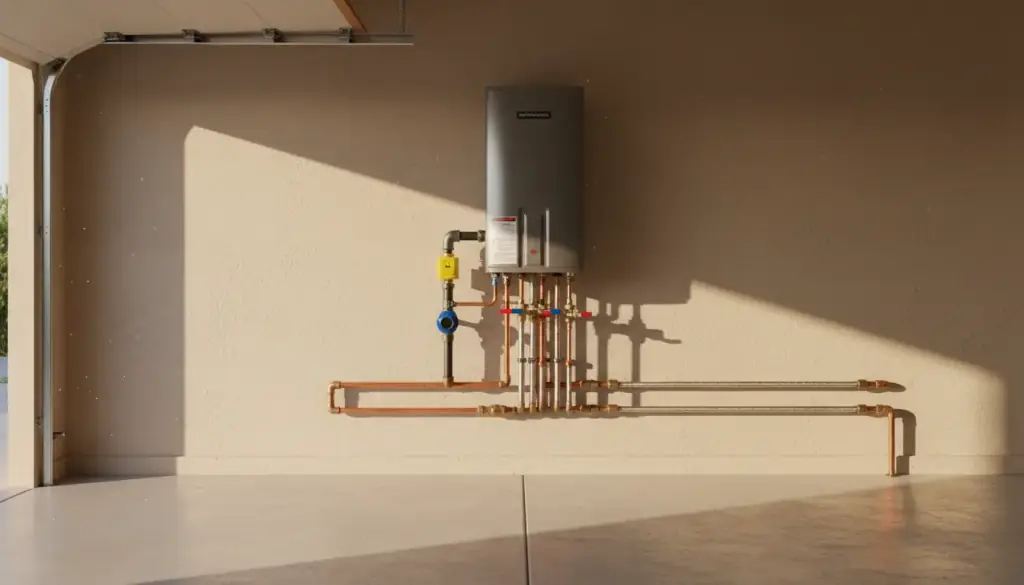
Arizona code asks for two things that cannot be skipped: proper venting and a working temperature and pressure relief valve. The vent carries combustion gases out of a gas unit and has to be sized and sloped correctly. The relief valve is the safety device that opens if pressure or temperature climbs too high, and it needs a discharge line that runs somewhere safe. Gas and electric hookups get the same attention: a gas connection with a shutoff and sediment trap, or an electric circuit that matches the unit.
Swapping fuels is a bigger job than swapping like for like. Emyleen B. had a broken gas heater and wanted to go electric, and her review says Mike and Ron explained every detail of the change. Moving from gas to electric means retiring the gas connection safely and putting the right electrical supply behind the new unit.
A standard tank replacement typically takes a few hours. First-time setups and tankless installs run longer, especially when new venting, gas line adjustments or electrical upgrades are needed. You get realistic timeframes and upfront pricing before work begins, and you can ask about our warranties on parts and workmanship.
Keeping the new heater out of scale
The West Valley is hard-water country, and a new heater starts collecting minerals the day it is switched on. Hard water builds sediment in the bottom of a tank, coats heating elements, and uses up the anode rod faster than it would in a softer-water market. Left alone, that can shorten the working life of a tank even when the heater is fairly new.
The upkeep is simple and worth putting on the calendar: flush the tank once a year, and have the anode rod checked so it can be replaced before the tank steel starts taking the corrosion. A water softener ahead of the heater goes after the cause instead of the symptom, and we install those as well.
Through December 31, 2026 there is $200 off a new water heater installation, and the heater is a purchase most people would rather not make in one lump. GreenSky financing lets you prequalify without any effect on your credit.