If you smell gas, leave first
Start with the one rule that matters more than any repair: if you smell gas, get everyone out of the house right away. Open the doors and windows you can reach on the way, and make the call from outside, not from the kitchen. Report the leak to 911 from a safe distance. Do not flip switches, do not light anything, and do not go back in to look for the source. Once you have been told it is safe to re-enter, turn off your gas appliances and air the house out, even if the smell has faded.
After that, call us at (623) 937-4258. Our emergency service runs 24/7, and the person who picks up is on our team. Other warning signs deserve the same attention: a gas line that was nicked during construction or yard work, a gas appliance that has stopped working, strange sounds or odors from an appliance, or visible damage at the connection points behind a stove or water heater.
Gas fittings are not a home project. A connection that looks tight can still weep gas, and a mistake can hurt people. This is licensed work, and Sunstate Plumbing holds the licences to do it, C37084810 and C37091700, along with insurance that protects you and us.
New lines, repairs and the hardware that guards them
Plenty of Peoria homes already run natural gas to a water heater, a range, a furnace or a fireplace, and plenty more could. Running a new line, or connecting a property to gas for the first time, means working through codes, regulations and safety requirements that exist for good reasons. We size the line for the appliances it will feed, route it so it is protected, and finish it with the pieces that make a gas system safe to live with.
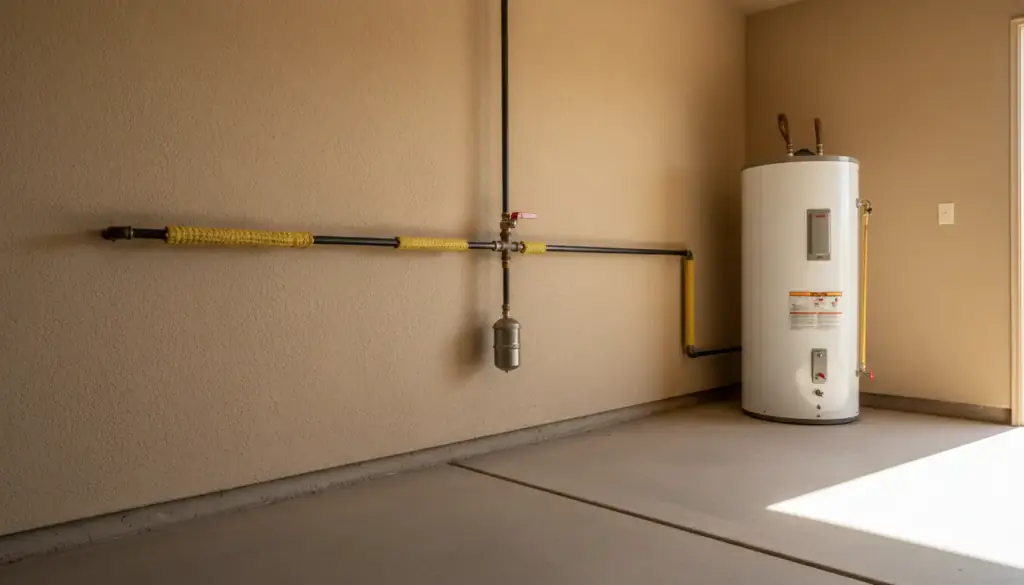
Look at a well-built gas run along a garage wall and you will see them: a shutoff valve within reach of the appliance, a sediment trap that catches debris before it can foul a burner, and connections made and checked rather than hoped for. Repairs follow the same logic. Leak detection comes before the wrench, because finding the actual fitting is what lets us fix one joint instead of replacing a whole run.
Typical hookups include water heaters, stoves, furnaces, heating systems, fireplaces and laundry appliances. We install new gas fixtures and repair existing ones, and we stand behind the work. Ask about our warranties when you call.
Gas to electric, and back again
Not every gas question ends with more gas. Sometimes the right move is to retire a gas appliance and go electric, and sometimes a home that is all electric should add a line for a range or a tankless water heater. Either way it is a plumbing job as much as an appliance job, and it gets handled as part of the same visit rather than as two separate problems.
A changeover affects more than the appliance. When a gas water heater is swapped for an electric one, the supply has to be capped safely, the venting question is settled, and the new unit has to be set up correctly in the space. One Peoria customer wrote about this exact job, with two of our technicians explaining every detail of changing from gas to electric before the replacement went in. Going the other way, from electric to gas, means a properly sized line and a proper shutoff before the new appliance is connected.
Whatever direction you are leaning, we will talk through the tradeoffs in plain language: the run, the cost to operate as you understand it, the space you have. Financing is available through GreenSky, and prequalifying does not affect your credit.